
What the Sullivan County Current Owner Record Shows
Start with the ArcGIS field labeled OWNER_NAME and copy it exactly as written. That entry anchors the rest of the parcel record. From there, pull the mailing details, including any attention line, street, and city-state, plus the physical location, SBL parcel number, acreage, assessed values, and roll year. Next, treat that name as a grantee in SearchIQS and open the newest matching deed. Recording dates matter here. A deed recorded after the annual roll can outrank the roll's owner of record, so the dates tell you which source deserves the follow-up.
| Owner of Record | Name(s) vested today |
|---|---|
| Vesting / Tenancy | Joint tenants, trust, LLC, etc. |
| Mailing Address | Where the owner gets tax notices |
| Situs Address | The property itself |
| Deed Reference | The recording that vested them |
| Ownership Since | Date of the current deed |
The OWNER_NAME field in ArcGIS is your anchor for Sullivan County property records. Record it word for word. Around it, gather the attention line, street, city-state, physical location, SBL, acreage, values, and the roll year tied to that parcel. Then take the apparent owner into SearchIQS as a grantee. Open the most recent deed that fits the property. Dates settle any conflict between sources. A newly recorded deed can postdate the annual tax roll. So compare recording dates before deciding where to look next.
Confirming the Current Owner in Sullivan County
In Sullivan County, confirming ownership begins with the ArcGIS OWNER_NAME field, copied precisely. Jot down the surrounding details too. The record typically lists an attention line, street, city-state, physical location, SBL parcel number, acreage, values, and the roll year. With that name in hand, search it as a grantee in SearchIQS and pull up the newest deed connected to the parcel. Timing drives the comparison. A deed recorded after the roll was finalized may name a newer owner of record than the roll itself shows, so let the dates point you toward the source needing a second look.
- Step 1: read the owner of record on the Sullivan County Beacon Property Search
- Step 2: pull the most recent deed in SearchIQS to confirm vesting
- Step 3: if an LLC or trust, identify the people behind it via the Secretary of State
- Step 4: note the owner mailing address for contact
- Owner of record
- The party the records show as owner.
- Vesting
- How title is held - joint, trust, entity.
- Registered agent
- The contact for an LLC/entity owner.
Reaching a Sullivan County Property Owner
To reach a Sullivan County property owner, begin with the OWNER_NAME field in ArcGIS. Use it exactly as displayed. The mailing block matters just as much. Note the attention line, street, and city-state. Also note the physical location, SBL, acreage, values, and roll year for the parcel. Search that owner's name as a grantee in SearchIQS. That leads you to the most recent deed on the property. One caution applies. A deed recorded after the annual roll can reflect a fresher transfer than the roll does. Recording dates determine which record warrants the follow-up.
Lawful use. 1-2 sentences - contacting a Sullivan County owner through the public mailing address is fine for property matters; using owner information to harass or intimidate is a crime under New York law.
How Current Is Sullivan County's Owner Field?
How fresh is that owner name? No Sullivan County source guarantees a fixed lag between a deed's recording date and the owner field on the assessment roll. Treat the field as a snapshot. Match its roll year against the deed's recording date before relying on it. Beacon does publish ownership, locations, structures, purchase dates, maps, and aerials, though a portal display still needs dating. Stable anchors such as SBL, SWIS, and instrument number let you reconcile the two systems even when portal labels shift, because those identifiers survive every interface change.
The parcel-layer schema marks which assessment fields are verified. Open the Sullivan County assessment roll layer.
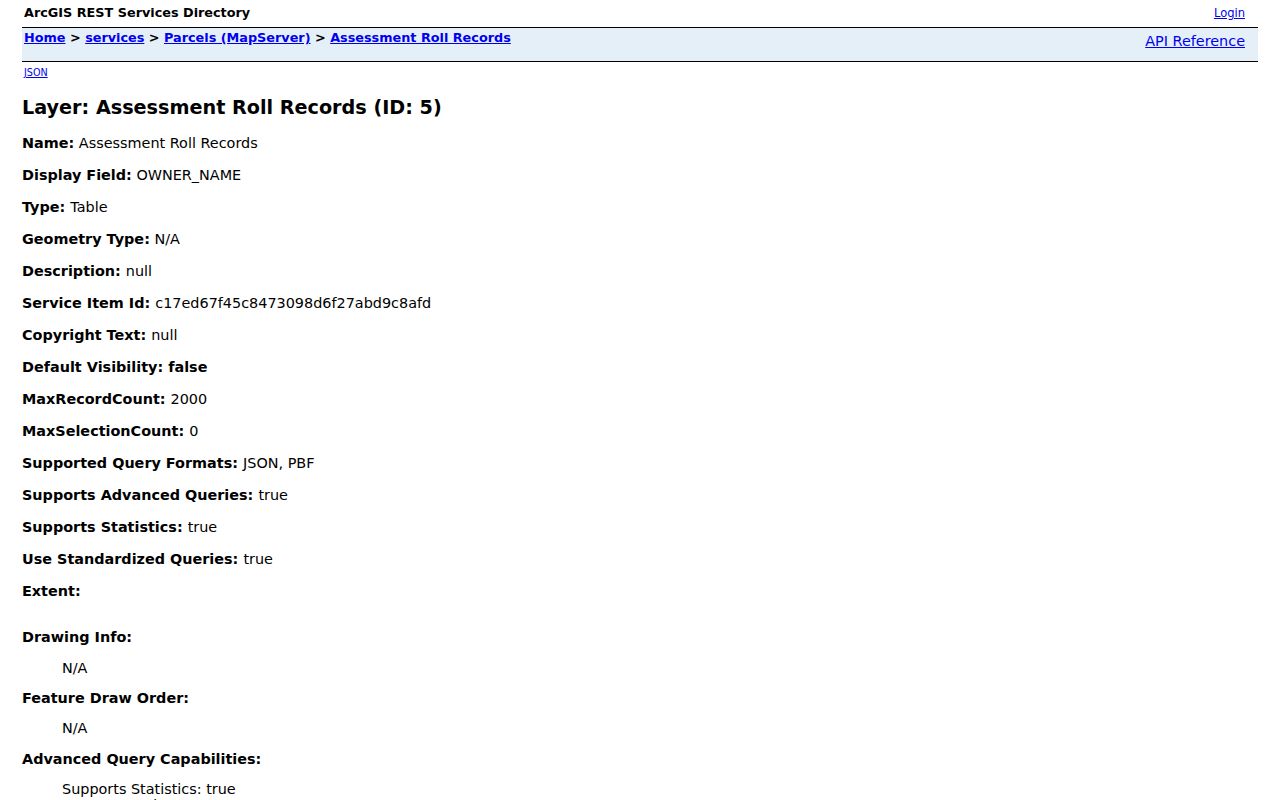
That schema matters because it defines assessment fields on their own terms, apart from how any consumer portal happens to display them.
Sullivan County Property Fraud Monitoring
Sullivan County's Clerk offers a free property-fraud alert service. You can track up to three spellings of a personal name or business names. It is a notification tool only. It does not block recording, and it is not proof of fraud. False positives happen. So check any alert against the indexed document itself. Talk it over with the Clerk before acting. Enroll using the exact name forms that appear in your prior deeds and entity filings. Keep your own deed records and recording references handy. That way you can compare quickly when an alert arrives.
Sullivan County Mailing and Physical Addresses
Read the mailing address fields separately from the physical-location field on a Sullivan County parcel record. A care-of line or an out-of-county mailing address can be perfectly valid, and it says nothing on its own about who occupies the property. Use that mailing address only for lawful, parcel-related contact.
Confirm the Sullivan County Owner with SearchIQS
SearchIQS works best with a precise name. Carry the owner's exact spelling from the assessment record into the grantee field, then narrow with the town, recording date, document description, book and page, or instrument number. Open the newest deed matching the parcel description. Then search that party as a grantor after the recording date. That second step is worth the trouble. It can catch a later transfer that has not yet shown up on the annual roll.
Recordings before 2010 usually cite a book and page. Newer documents carry an instrument number instead. Preserve the identifier, the recording date, the parties, and the vesting terms. When the public index offers no image, request the deed from the County Clerk's Land Records Room or its copy process rather than trusting a result-row abbreviation.
Entity and Estate Owners in Sullivan County
Sullivan County rolls often name entities, not people. An LLC, trust, estate, executor, administrator, or trustee can be the party of record. Search every name variant exactly. Include punctuation and suffixes in your query. The New York Department of State inquiry helps separate business entities, and Surrogate's Court indexes can explain a fiduciary's authority. Neither source changes the land record itself. The recorded deed still governs how title was vested.
A mortgage, tax bill, or mailing address can corroborate the parcel and the party, but none of them establishes current ownership on its own. Compare each supporting source against the SBL and the dates, and when records conflict, ask the custodian to confirm rather than picking whichever interface looks newest.
The County Clerk runs a fraud-alert service that accepts multiple name forms. That flexibility matters. Owners appear with initials, former surnames, or business-name variations. An alert only reports an indexed match, so open the recording and check its parties, document type, and parcel relevance before deciding it affects the current owner.