
The Values on a Sullivan County Property Record
A Sullivan County property value record tells you three different things at once. The assessed value drives the tax roll. The full-market estimate reflects the assessor's valuation method. The consideration on a deed records what a transfer document stated. None of these is a guaranteed price for today. When you search Sullivan County property records by address or parcel number, note the roll year first, then judge each figure against its own date and source. That habit keeps comparisons honest across Sullivan County parcels.
| Value | What It Is | Where |
|---|---|---|
| Assessed value | The value used for taxes | ASSESSOR |
| Market / appraised value | The assessor's full-value estimate | ASSESSOR |
| Last sale price | What it last sold for | RECORDER deed / assessor |
| Land vs improvement | Value split of land and building | ASSESSOR |
Open a Sullivan County parcel in the assessment layer and you meet TOTAL_AV, LAND_AV, and FULL_MARKE alongside acreage, property class, municipality, and roll year. Those property records fields each answer a distinct question. Equalization and level-of-assessment concepts in New York account for the gap between assessed and full-market figures. A deed receipt can state consideration. Yet family transfers, partial interests, and similar circumstances keep that number from standing in for true market value.
Looking Up a Sullivan County Property Value
Finding a Sullivan County property value starts with the assessment layer. It lists TOTAL_AV, LAND_AV, FULL_MARKE, acreage, property class, municipality, and roll year for each parcel. Each field serves the tax roll differently. Municipalities assess at different proportions of market value. New York's equalization framework explains why assessed and full-market figures pull apart. A deed receipt may show consideration. Remember that family transfers and partial interests can make that figure something other than market value.
- Step 1: search the address in the Sullivan County Beacon Property Search
- Step 2: read the assessed and market/appraised values and the year
- Step 3: check the last sale price on the deed for a market reference
- Step 4: compare with the neighborhood if the assessor shows comparables
- Assessed value
- The taxable value.
- Market / appraised value
- The assessor's full-value estimate.
- Level of assessment
- The ratio of assessed to market value.
What a Sullivan County Assessor Value Is Not
An assessor value is not a price tag. Sullivan County's assessment layer reports TOTAL_AV, LAND_AV, FULL_MARKE, acreage, property class, municipality, and roll year, and each figure serves the tax roll rather than the open market. Level-of-assessment and equalization rules in New York widen the split between assessed and full-market numbers. A deed's consideration is not an appraisal either. Family transfers, partial interests, and other structures can put a nominal figure on paper.
Value vs price. 1-2 sentences - a Sullivan County assessor value is not what a property will sell for; for a sale or loan, get a licensed appraisal.
Sullivan County Assessment Level and Equalization
New York's level-of-assessment and equalization framework lets you read assessed values across municipalities. The municipalities assess at different proportions of market value. Match the year and the town every time. The ArcGIS property records fields stay distinct. TOTAL_AV carries the roll's taxable assessment basis. LAND_AV isolates the land component, and FULL_MARKE estimates full value. Exemptions can shift taxable amounts without touching ownership or the market itself. The assessment sample shows total assessed and full-market figures side by side. Review the Sullivan County value-field sample.
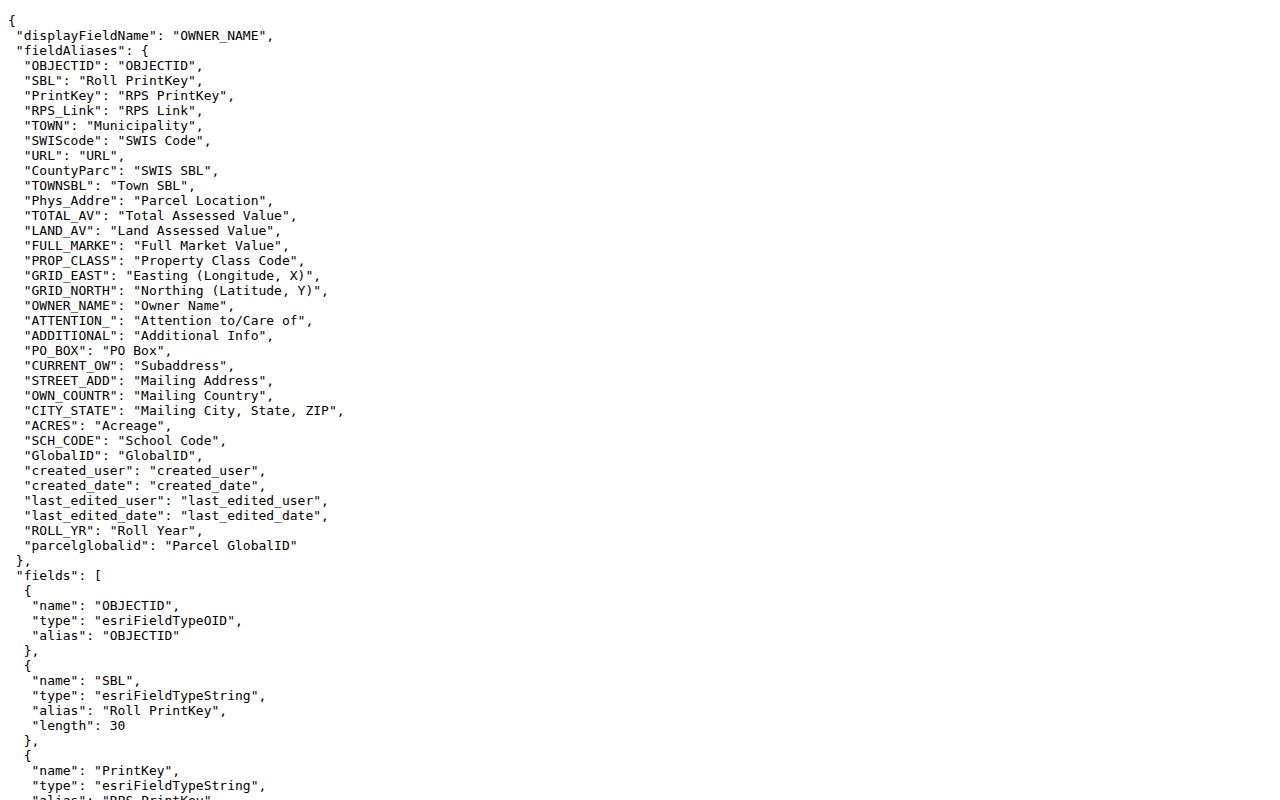
The side-by-side fields illustrate why one figure should never be silently substituted for another.
Recorded Consideration Is Not a Sullivan County Appraisal
A Sullivan County deed or transfer-tax receipt can state a consideration figure. That number may reflect a family transfer, a partial interest, a nominal amount, or an assumed obligation rather than a true sale. The official sample records $45,000, which proves only what that one document reports. It is not evidence of market value for other parcels or dates. For a present opinion of value, consult a licensed appraiser. Give the appraiser the parcel's condition, rights, improvements, and relevant market evidence so the appraisal rests on more than the deed.
Dated Sullivan County Value Trends
Trend work stands on comparable roll years and municipalities. Note the roll vintage, property class, acreage, improvements, and source before comparing Sullivan County parcels. A portal transition or later sale never changes what an older property records roll reported.
Compare Sullivan County Values Within One Roll Year
Compare Sullivan County values within one roll year, one assessing municipality, and one property class. Record acreage, structures, land assessment, total assessment, full-market estimate, and exemptions before concluding anything. A parcel in another town may sit at a different assessment level. An older roll cannot casually meet a newer sale. New York equalization information helps normalize municipal differences. But it cannot turn a mass-appraisal record into a property-specific appraisal.
The county's assessment fields include LAND_AV, TOTAL_AV, and FULL_MARKE. One sample shows total assessed value of $92,500 and full-market value of $203,297. Those figures prove the fields are deliberately different. They belong to that dated sample only and should not estimate another property.
Use Sullivan County Sale Consideration with Care
The Sullivan County Clerk's deed and transfer records can report consideration. One official receipt example shows $45,000. Yet a recorded amount is not automatically an arm's-length market price. Family transfers can all shape the reported number. So can partial interests, nominal consideration, assumed obligations, and estate transactions. Read the deed and transfer forms for context. Never substitute consideration for an appraisal.
A purchase date in Beacon or the assessment data points toward the relevant recording. Confirm it in SearchIQS and keep the instrument number or book and page. A deed date and portal purchase date sometimes differ. Distinguish execution from recording, and ask the custodian which event the displayed field represents.
Structures, Acreage, and Sullivan County Valuation
Beacon's published categories cover structures, property location, purchase dates, maps, and aerial imagery. Those facts help explain a mass-appraisal result. Still, check field completeness and update timing on the live record. Building permits stay municipal. So Liberty or Monticello improvement work may need a town or village route rather than a Sullivan County deed search.
Acreage and improvement data can rest on administrative estimates. Compare them with the deed, survey, permit history, and a physical inspection when accuracy matters. A licensed appraiser can weigh condition, rights, improvements, and current market evidence. The public tax roll cannot capture all of that.
Keep the roll year attached to every value you save. A later Beacon update, a corrected assessment, an exemption change, or a recorded sale can alter the displayed context without changing what the earlier Sullivan County roll reported. That discipline keeps value comparisons honest and reproducible.